

First Year Seminars Foster Dialogue, Belonging
By Barbara Allison
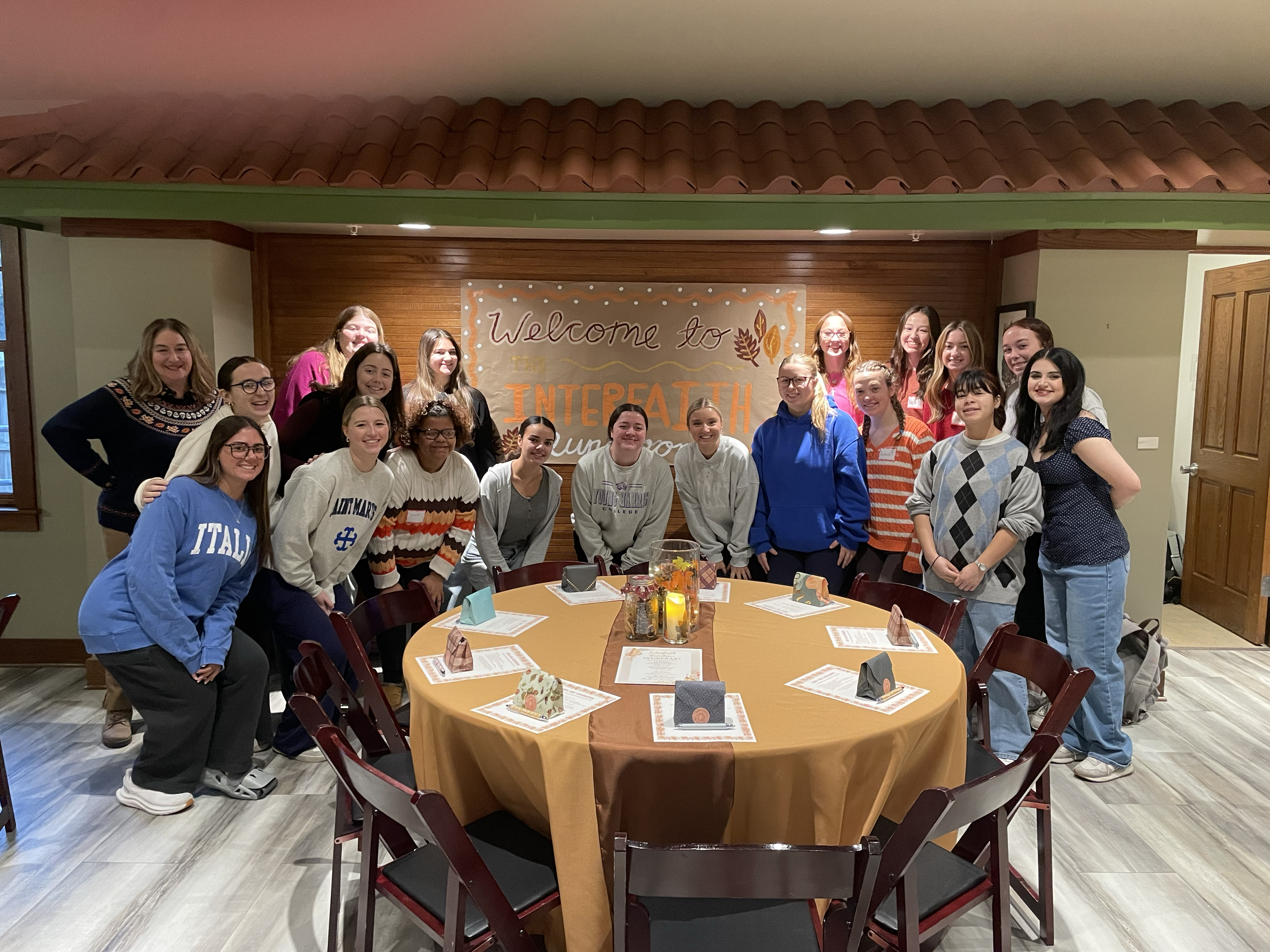
Course topics such as Religions and the Good Life; Event Design; #MeToo: Communication, Advocacy, and Accountability; Race and Place in 20th Century America; and Mystery Across Time, Space, and Text defy comparison at first glance. However, these First Year Seminar (FYS) classes, taught for the first time last fall at Saint Mary’s College, shared a common goal: to create community and to foster a culture of belonging through meaningful dialogue.
“First Year Seminar faculty designed courses to include a high-impact teaching approach called reflective, structured dialogue," explained Cassie Majetic, professor of Biology, chair of the Department of Environmental Studies, and director of the First Year Seminar program. “The idea is that we speak to be understood, and listen to understand and to create connection.”
This new series of courses, built within the framework of the Avenue Experience, will be easier to assess, explain, track, and allow for some flexibility and freedom for incoming first years, who chose from 22 new offerings that kept the rigor and aligned with the values of a Catholic, liberal arts education at a women’s college.
Majetic, Provost Megan Halteman Zwart, and Karen Chambers, Dean of Student Academic Services and coordinator of the First Year Experience, worked with Essential Partners of Cambridge, Mass., a nonprofit that collaborates with a range of groups, including higher education professionals, to help people bridge differences and create meaningful connections. Following professional development led by Essential Partners facilitators, faculty designed courses unique to Saint Mary’s and exclusively for first-year students, each centered around an enduring question or contemporary challenge.
“As we build the Avenue Experience curriculum, our belief is that the ability to dialogue across differences and the ability to create community are skills that you grow over time,” Chambers said. “We have a diverse student body in terms of beliefs and thoughts and affiliations. I think it’s a blessing and responsibility to help students learn how to have big conversations about important things and still maintain relationships.”
Gratifying is a word Majetic heard repeatedly when talking with faculty about the inaugural initiative. “I had a number of faculty talk to me about how deeply engaged their students were, how enthusiastic they were in the classroom space, how exciting and exhilarating that felt for them,” Majetic said. The faculty valued the experience so much that 13 of the 22 who taught the Fall 2025 classes have committed to teaching a FYS class again next fall.
“I keep hearing from students that they were excited, that they had fun,” Chambers said. A student who took Mystery Across Time, Space, and Text, taught by Jennifer Warfel Juszkiewicz ’06 told Chambers, "I didn't know that playing [board games] could be for credit!”
Juszkiewicz, director of the Writing & Tutoring Center and the Writing Proficiency Program at the College, and her class explored enduring questions surrounding the mystery genre in literature. “I was an English and History major when I was a student here, and one of my most memorable classes was Women, Mystery, and Detection, taught by Professor Laura Haigwood,” Juszkiewicz said. “First Year Seminars are intended to help students investigate an enduring question, and what literary question is more enduring and appealing than “Whodunit?”
We have a diverse student body in terms of beliefs and thoughts and affiliations. I think it’s a blessing and responsibility to help students learn how to have big conversations about important things and still maintain relationships.
- Karen Chambers
Juszkiewicz introduced her students to Dorothy L. Sayers, a British feminist author and a pioneer of the modern detective novel. They read Gaudy Night, set just before WWII at a British women’s college. Although a long work, Juszkiewicz said students devoured the book: “They cared about the novel’s representation of debates about marriage and female independence, stereotypes about women’s education, and how a community of women creates belonging as well as division.”
.jpg)
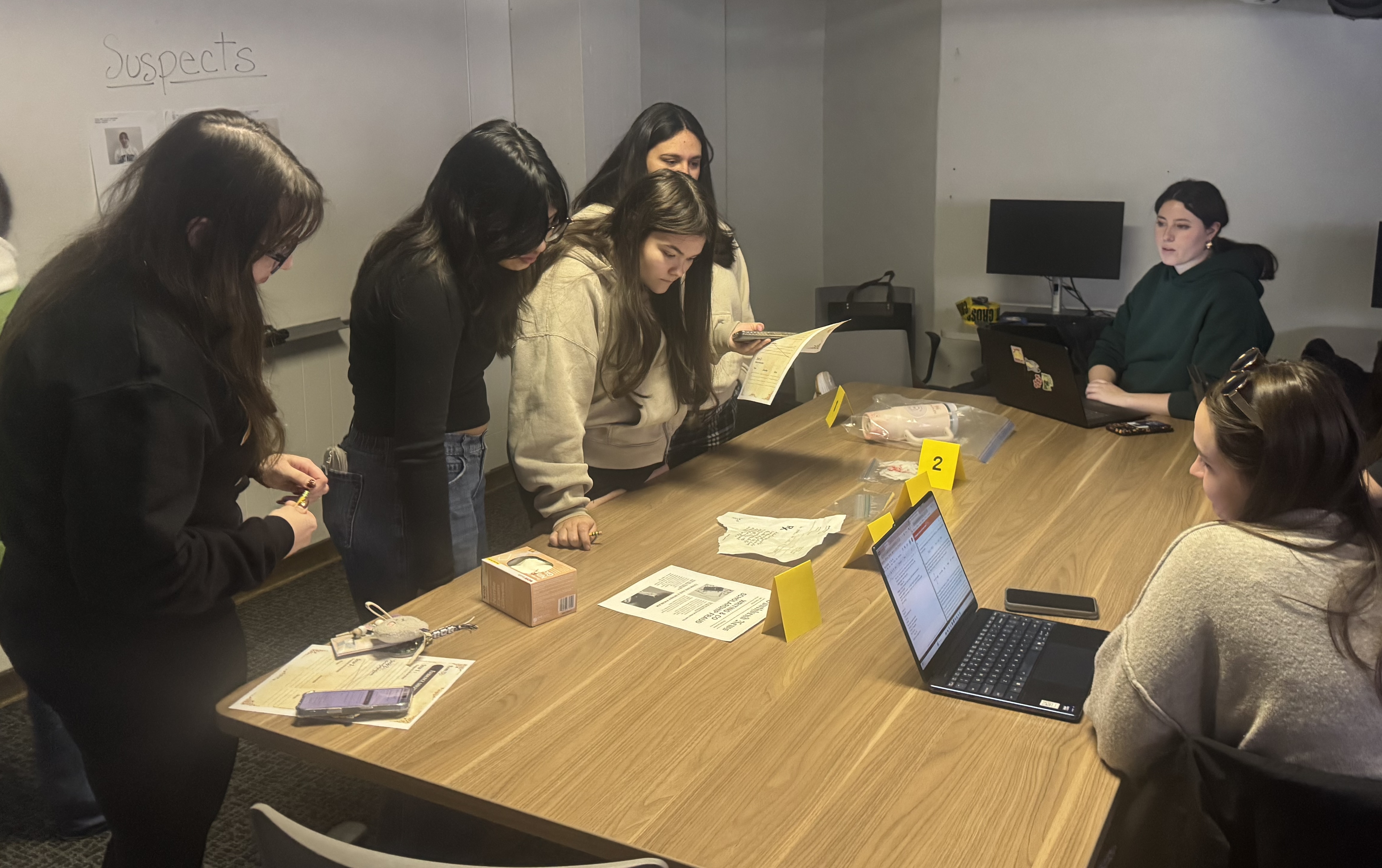
For their final project, students created their own whodunit. Participants descended into the tunnels under campus to witness the scene of a fictional crime. Other students examined evidence and interviewed suspects. Using pre-recorded videos of the “suspects” last moments with the victim and assembled evidence, students were tasked with solving the crime. They voted on who they thought perpetrated the crime and they were 75 percent accurate. “The students had such fun with this—those portraying the victims and suspects fully engaged in their roles, and those who created props and handled logistics did a spectacular job. I was so impressed by the entire class,” Juszkiewicz said.
Throughout the class, Juszkiewicz’s students engaged in difficult conversations within the context of mystery novels, including assumptions about class—the butler did it!—to questions about race and religion—whomever is different is suspect.
These assumptions also resonated with Leylany Rivera ’29, who chose the FYS class #MeToo, Communication, Advocacy, and Accountability, taught by Amanda Brand, visiting professor of Communication Studies. In the class, students learned to understand the legacies of violence surrounding marginalized groups.
Class discussions dealt with topics such as narrative shaping, power dynamics, and media perception. Rivera and her fellow classmates read news articles, including the case of convicted sex trafficker Jeffery Epstein; Brett Kavanaugh’s Supreme Court confirmation hearings and the testimony of Christine Blasey Ford; and Brock Turner, a Stanford University swimmer who was convicted of three counts of sexually assaulting a woman behind a dumpster, for which he only served three months in prison.
“We learned that the media usually tends to focus on the perpetrator and highlights their best qualities instead of the victims and survivors,” said Rivera. “I question the media I consume now. I think about all sides of the story, of who is pushing this out and why.”
Meaningful dialogue and community agreements were paramount in this class. “I was nervous to express my opinions, especially about sensitive topics. Professor Brand did a great job of making sure that we were all able to express our points of views in a respectful manner, without the fear of being judged,” Rivera said.
As their class project, Rivera and her fellow classmates created an Instagram campaign, Monarchs for Change, which focused on dispelling misinformation and biases about immigrants. They posted three times weekly, and at the end of four weeks, they had 50 followers and garnered much community engagement. “I learned so much about how to communicate meaningfully about sensitive topics,” Rivera said. “It was definitely one of my favorite classes.”
“I have been grateful for the faculty that have been willing to roll up their sleeves and jump into this venture,” Majetic said. “Students enjoy these experiences, and that makes me feel like this is the direction that we can continue to grow in.”
February 10, 2026