

Toni Brock Johnson ’89 Named 2026 Shannon Executive Scholar
The Shannon Executive Scholars Program, established by a gift from Professor William N. Shannon and his wife Bonnie, is an annual program at Saint Mary’s College that invites successful alumnae back to campus to share their career development, expertise, and experiences with students, faculty, and staff in addition to personal visits with College leaders. Executive Scholars visit the College and share their expertise with students in professionally related classes as well as informal meetings.
This January, Saint Mary’s College welcomed home alumna Toni Brock Johnson ’89 as the 2026 Shannon Executive Scholar. Over the course of her visit on campus, coinciding with Notre Dame's STEM Professional Development Weekend, Johnson engaged with students in Business Administration, Chemistry, and related STEM classes, drawing from her extensive background in pharmaceuticals and business operations. Both the sciences and business departments were instrumental in shaping her career trajectory.
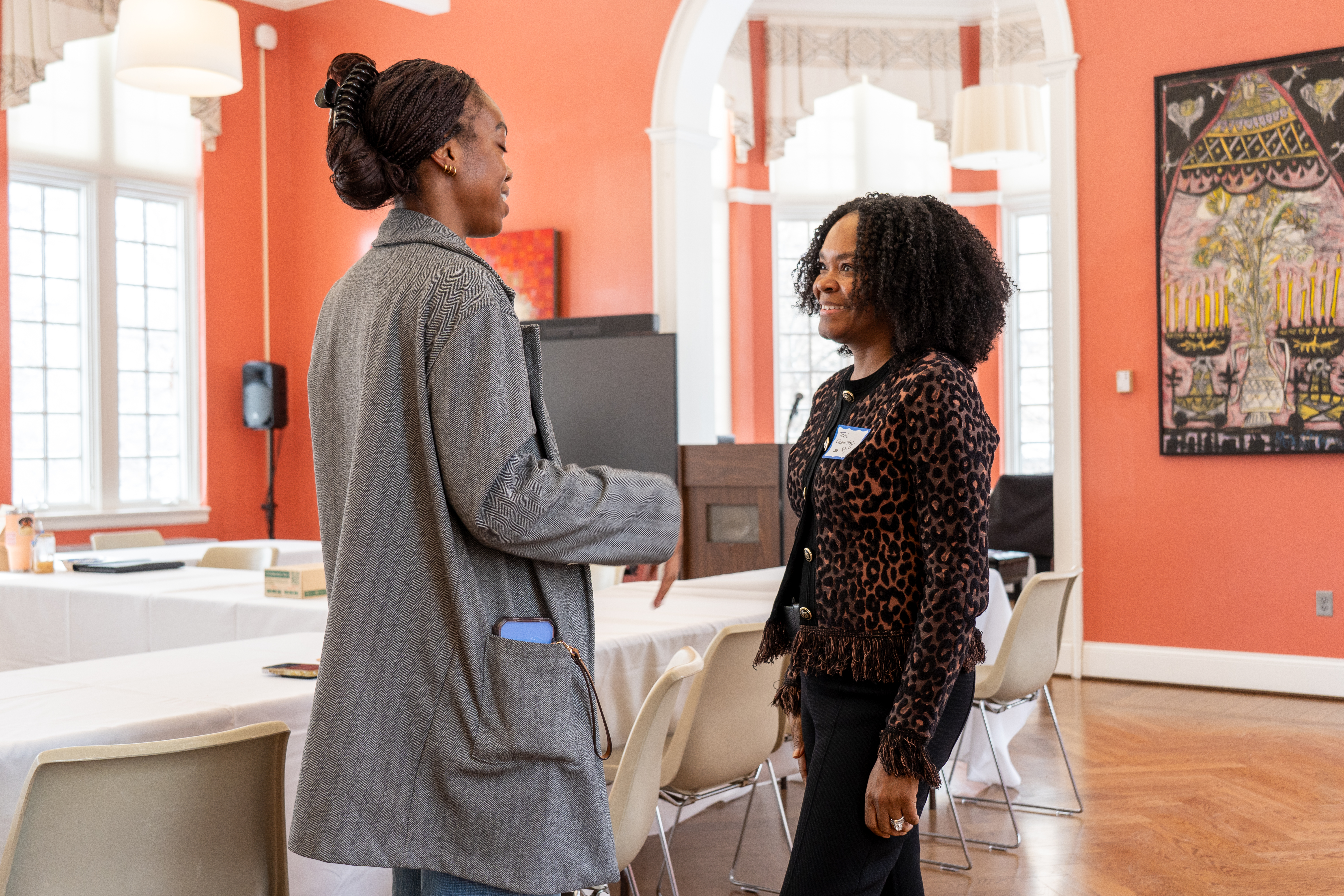
Johnson was born in Rochester, New York, but grew up in Pittsburgh, Pennsylvania. She discovered Saint Mary’s through an unexpected connection: her pastor’s son played football at Notre Dame. "My mother thought, well, you know, if Joel is there, you'll be safe…”, even though Saint Mary’s was not on the top of her list. “I actually wanted to go to Syracuse, but I didn't get enough financial aid. Saint Mary's came in and offered me almost a full ride, so it made a lot of sense."
Coming from an all-girls high school, the transition to Saint Mary’s felt familiar. She appreciated the focused environment, saying: "You're not distracted. I think even the professors really leant themselves to giving their all in the classroom, and not focusing on one set of people versus another.”
At Saint Mary’s, Johnson majored in chemistry, and during her junior year, did a preceptorship with a plastic surgeon. “I quickly realized that I loved the operating room, but I was already a junior. And while I loved being around math and science, I talk[ed] too much to be in a lab.” That’s when she decided to pivot towards the business side of medicine. "It would give me the best of both worlds, right? I can talk to physicians, and I can also still be around STEM."
After graduating from Saint Mary’s, Johnson got her start at Merck Sharp & Dohme—now Merck & Co.—in pharmaceutical sales, sharing a memorable interview story: After learning that the company would be in town to conduct interviews only at the University of Notre Dame, Johnson learned there were no interview slots left. "I called at least 15 times so that I could get an actual interview, and finally they called me back agreeing to give me an interview, because I told them I would take them to lunch.” There were two people Merck selected to move on for a second round of interviews, and she was among the two. The interview was to take place in Chicago: “I didn't have a car to get to Chicago.” However, her then-boyfriend did have a car, and her then- boyfriend was the second selected interview candidate. “We were driving together to this interview, and the entire time, he's telling me, “Toni, I don't know why you're going, this is my job. I just sat there quietly thinking, “Yeah, we’ll see.” 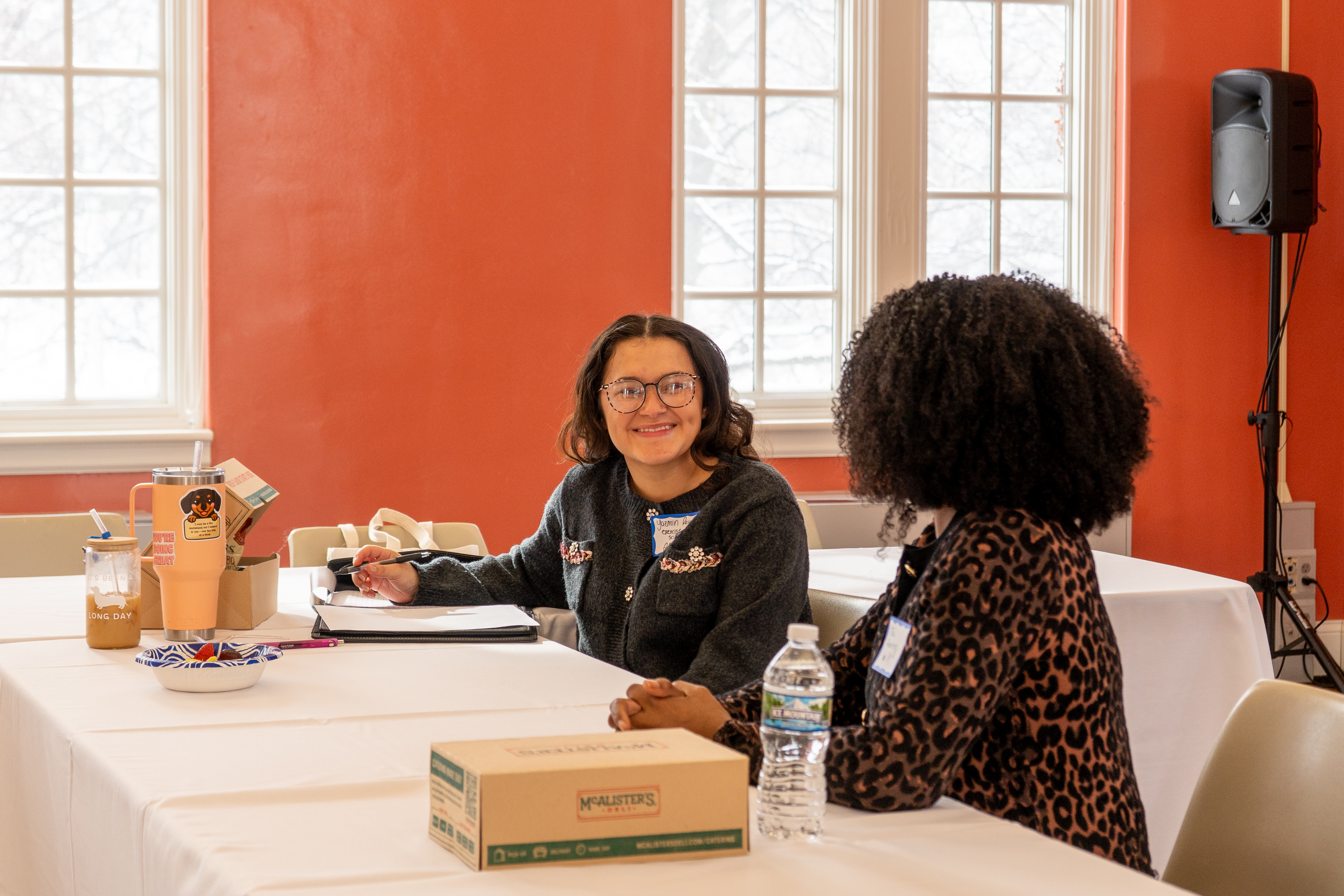
Toni Brock got a call two weeks later with a job offer.
This was a pivotal moment for her, as it was the first step in the door of the pharmaceutical industry. Taking a moment to highlight a personal value she strives to make space for in her career, Johnson said, “The industry really represented an opportunity for me to showcase not just my talents, but my talents as a Black woman.” At that time, few Black women were selected for positions in the pharmaceutical sales industry.
After a few years, Johnson briefly left pharmaceuticals and returned to Pittsburgh, working for a nonprofit. Her position focused on helping welfare mothers with job skills and placements. "My job was to help the mothers build their soft skills, interview skills, and help build their resumes." Part of this position also required her to connect with employers and help the mothers get on their feet with jobs. Her connections with employers eventually led to a role at the University of Pittsburgh Medical Center in their Human Resources department; “I’d never been an HR specialist, but it sounded interesting.” The first time she went through the interview process, she didn’t get the job; but they called her back, and interviewing a second time, the call resulted in a job.
For nearly a decade, Johnson’s resume had been floating around the desks of recruiters and temp agencies. In the midst of working at UPMC, one day, a recruiter called about a job that would beckon Johnson back to the pharmaceutical sales industry. “I told [the recruiter], “I think I’m good. My job is great, and I really love the people I work with.” The recruiter convinced her to interview at Bristol-Myers Squibb (BMS).
Showing up in a bright power-suit, Johnson interviewed for the job, a job at the time she didn’t want. Alas, she was hired, and has remained good friends with the man who hired her.
Joining BMS in sales, with clear ambitions, Johnson kept telling her managers: “I will do sales, but I do not want to do this long-term. I really want to get into business. I really see myself as a vice president." Over her extraordinary career at BMS, Johnson became vice president of Corporate Analytics and Transparency. "About every six months, I was either being promoted or asked to do something that was interesting... I can work with just about anybody."
Regardless of where I found myself, I always wanted to make sure that I was stretching myself, getting the best experience out of whatever opportunity presented itself.
- Toni Brock Johnson ’89
After her 27-year stint of growing and succeeding at BMS, Johnson left the industry to chase a life-long dream of being an entrepreneur. “My husband and I owned a few properties, and as we began to think about the industry I worked in shifting and morphing into new things, I decided to take a leap of faith.” Johnson and her husband started a company called PrimeVest Properties LLC, first and foremost a real estate business. Purchasing six properties at one time, three required renovation, two homes needing ground-up construction, and a house. “Real estate is not that much different than the work I’ve done in pharmaceuticals; I was managing a different set of people with a different language.”
Johnson and her husband Robert, having assessed the home-buying market, noticed they wanted to invest in the future. “We really began to think about how we wanted to use building materials in a more sustainable way, so that there is a future for younger people.” She continued: “Preserving nature in a way that makes sense for the next generation is really important to me. I think as I start to wonder about all that global warming and pollution has done to our planet, it’s something we should start thinking about if we want to preserve our planet for the future.” For Johnson, sustainability should be a part of everything we do: “We need to have a place to live, which means you need shelter. How do we do that in a way that doesn’t completely disrupt the land we’re living on?”
Johnson hasn’t stopped there; she is also the founder of The Journey Experience, an organization focused on and for the growth of women in the workforce. This is a program very close to her heart, and important to her for numerous reasons.
Growing up in a single-family home, Johnson’s mom was both mom and dad. “She was the person that provided us life, all the way to the person that made sure we were able to do what we needed to do.” While working at BMS, Johnson found herself as a mentor to Black and Brown women. She said, “I was one of the first in my family to ever work in corporate America, so I did not understand exactly how it worked. How do you get ahead? How do you actually find your way into a senior executive role? It is really difficult when you don't have somebody to model that.”
Journey Experience is not only important to her, but her passion and a way to give back. “It is really about helping women who are in mid-level careers find their way into senior executives roles not by happenstance, but by really careful planning and thinking about their careers.” Johnson believes it is possible to have everything that you want—maybe not all at the same time—but one can certainly do the things that they want out of life. This is a pivotal component to Journey’s mission.
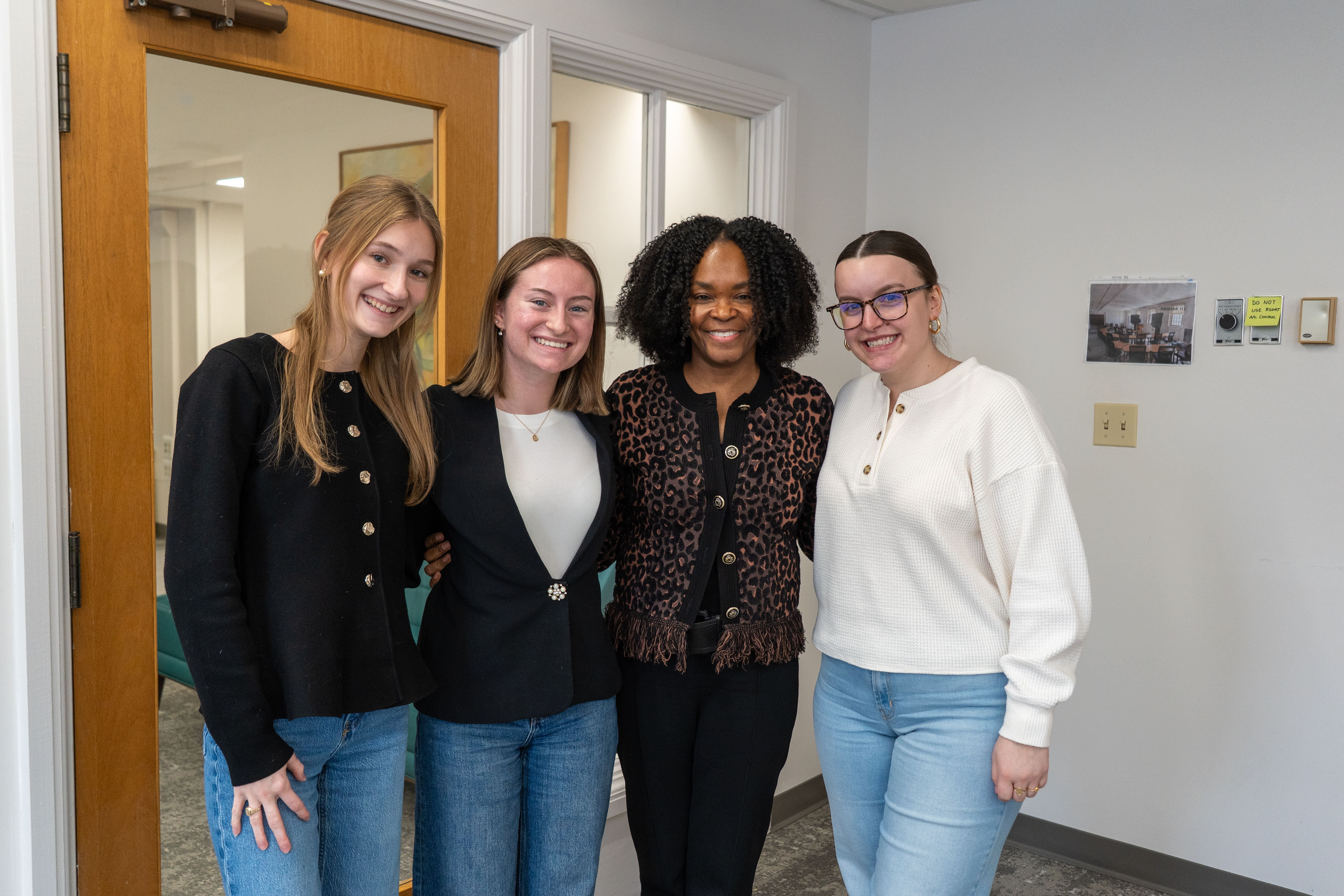
But that’s not all. In the midst of pursuing her entrepreneurial dreams, Johnson attended Drexel University and earned her MBA. Drawn to Drexel’s roots in Philadelphia, Johnson became the co-president of the Executive MBA program’s alumni board and a member of the Bridge Program Board—created to support first generation and low income students—at Drexel’s LeBow College of Business. She felt as though her participation was the perfect way to give back to “a program that gave me an opportunity to meet people in different industries that I probably never would have met.”
She is actively involved in the Free Library of Philadelphia. Johnson recalls growing up in libraries. “The Free Library plays an important role in literacy; not just reading literacy, but financial and health literacy. And in certain neighborhoods, the library is a shelter for a lot of its residents.”
She also sits on the NAACP Foundation Board. Johnson recalls her grandmother being a local legend. “She was adamant that we were a part of the NAACP as kids, so when I had the opportunity to join the board at the national level, I jumped at it, as it would be a way to continue her legacy.” She says that the work the NAACP is doing currently is not just absolutely critical for all people—especially Black people—,“This is for all of us,” and “We are in a time that if we are not fighting back, we could lose everything this country stands for.” Her work with the NAACP is not only good work; it’s necessary work.
Reflecting on her time at Saint Mary’s, Johnson acknowledged challenges as one of few Black students: "There weren't many African Americans on campus at that time. So it was challenging... I had to learn very quickly how to adapt to ill treatment at times, and I also had to learn how to put boundaries around things that weren't acceptable for me." Yet, she views it positively: "Every culture has its own language... I learned a set of norms that were not part of my world, and I think it afforded me the opportunity to adapt while in corporate America... I don't look at it as a negative experience. I look at it as part of what needed to happen so that I could succeed."
Returning as Shannon Scholar, she hopes to impact students much like influences shaped her. "Saint Mary’s grads are confident. They know they have a voice and that they can use it." Johnson embodies what her alma mater instilled: resilience, adaptability, and a commitment to community. "Be yourself. Communicate your thoughts. Share your opinions. Share your ideas. Don’t be afraid to speak up."
February 9, 2026