

A Celebration of Inspiring Women
By Barbara Allison
In March 1980, President Jimmy Carter proclaimed the week of March 8 Women’s History Week. Six years later, the National Women’s History Project successfully petitioned Congress to expand the event to encompass all of March. Women’s History Month celebrates the women whose achievements and contributions to history were often overlooked or co-opted. We asked Saint Mary’s faculty about the innovative women—past or present—who are shaping their curriculum.
Cassie Majetic, Professor of Biology
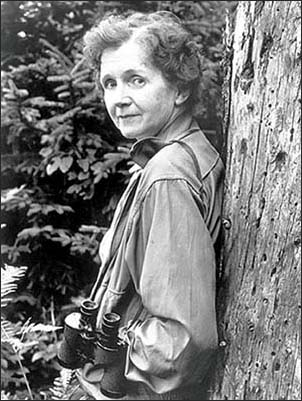
Majetic selected Rachel Carson. Carson grew up not far from where Majetic calls home in Pennsylvania, and trained in both biology and writing—a true liberal arts individual. She wrote several books in the 1950s and 1960s that were a combination of science writing for the public and investigative journalism. Her most well-known book, Silent Spring, linked songbird nest failures to the widespread use of the pesticide DDT. When asked to testify in front of Congress about the book, Carson was labeled as a hysteric. She died of cancer prior to her research being confirmed by scientists. The book is now considered one of the key writings that launched the modern environmental movement.
Julie Tourtillotte ’82, Professor of Art
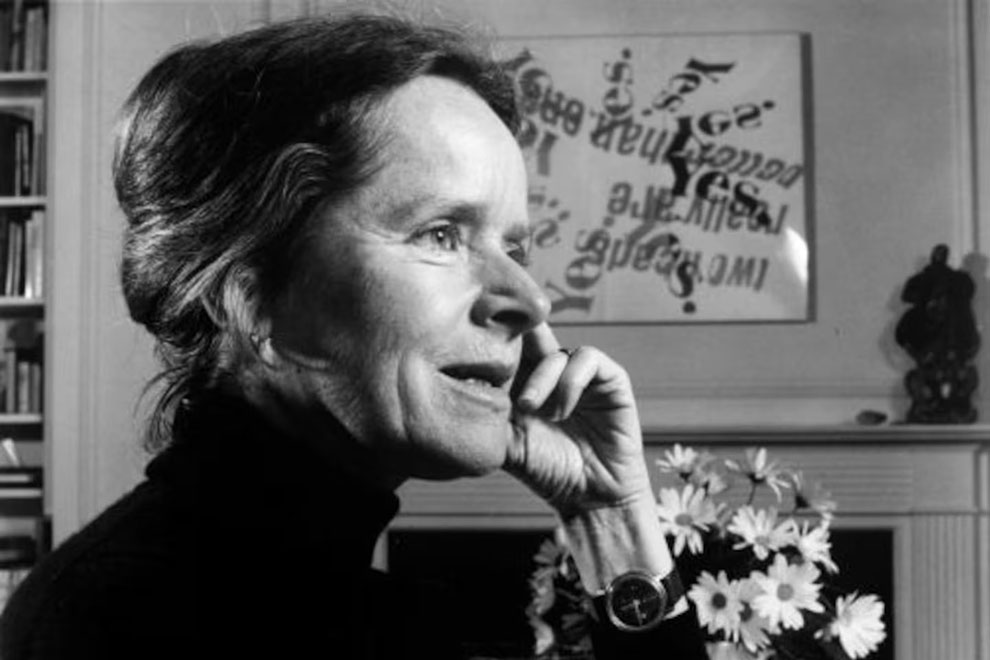
Tourtillotte recently introduced Corita Kent (1918 –1986) to her fabric printing class. Kent was a pop artist, teacher and former religious sister. Nationally recognized for her screenprints during her lifetime, Kent’s bold, graphic designs combine image and text to advocate for peace, justice, and human rights. In addition to studying her prints, Tourillotte is also inspired by Kent’s list of rules that she created with her students for the art department at Immaculate Heart College in Los Angeles where she taught in the 1950s and ’60s. Here are a few:
- General duties of a student: Pull everything out of your teacher. Pull everything out of your fellow students.
- General duties of a teacher: Pull everything out of your students.
- Consider everything an experiment.
- The only rule is work. If you work it will lead to something. It’s the people who do all of the work all the time who eventually catch on to things.
And the list of rules ends with these Helpful Hints: Always be around. Come or go to everything. Always go to classes. Read anything you can get your hands on. Look at movies carefully, often. Save everything—it might come in handy later.
Sarah Noonan, associate professor of English
Noonan shared three literary giants that she teaches to her students:
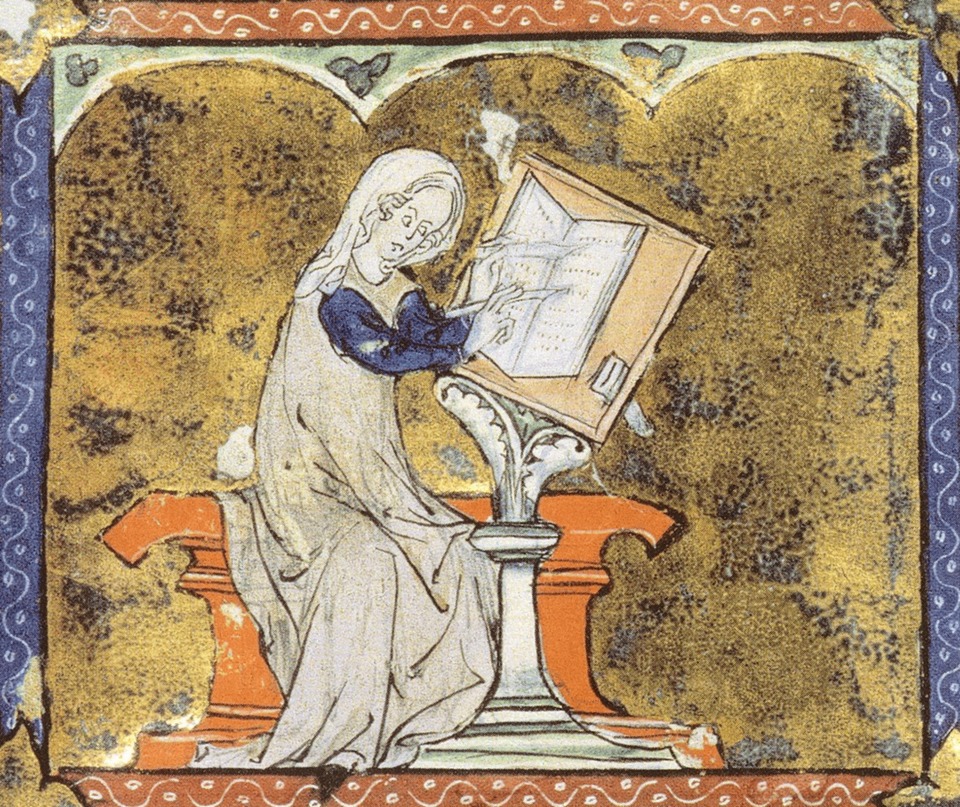
Marie de France (c. 1140-c. 1215) wrote three main works in Anglo-Norman French: a collection of Lais, a collection of Fables, and St. Patrick's Purgatory. Every time Noonan teaches Lais, the students love them. Noonan describes them as witty and accessible—while also bearing great depth that welcomes reflection and analysis. Her voice emerges from the literary record out of nowhere, offering us a rare example of a confident, accomplished woman writer from a time when almost no other women literary writers were active, that we know of.
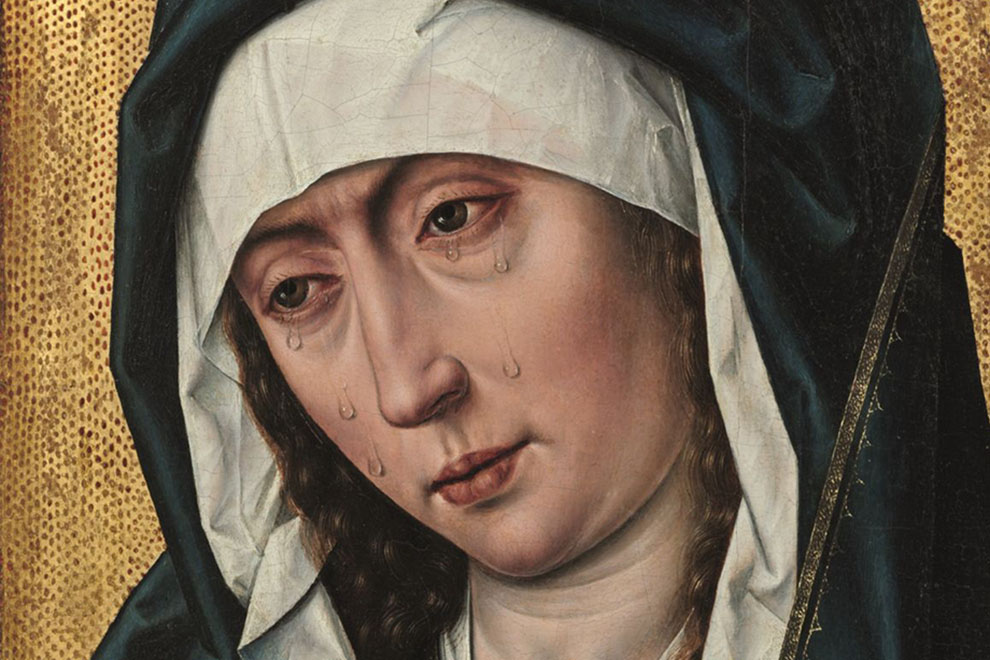
Margery Kempe (c. 1373-c.1438) Margery Kempe provides one of the earliest autobiographies written in English, according to Noonan. Active during the first half of the 15th century, Kempe's personality leaps off the page, as she recounts her early business ventures, mental health struggles after the birth of her first child, her visions of Christ and Mary, her pilgrimage voyage to Jerusalem, and her legal run-ins with church authorities. Noonan describes her as a woman who had ambition and a deep devotion to her faith, and one who offers insight into the lives of women in the 15th century which would otherwise be inaccessible.
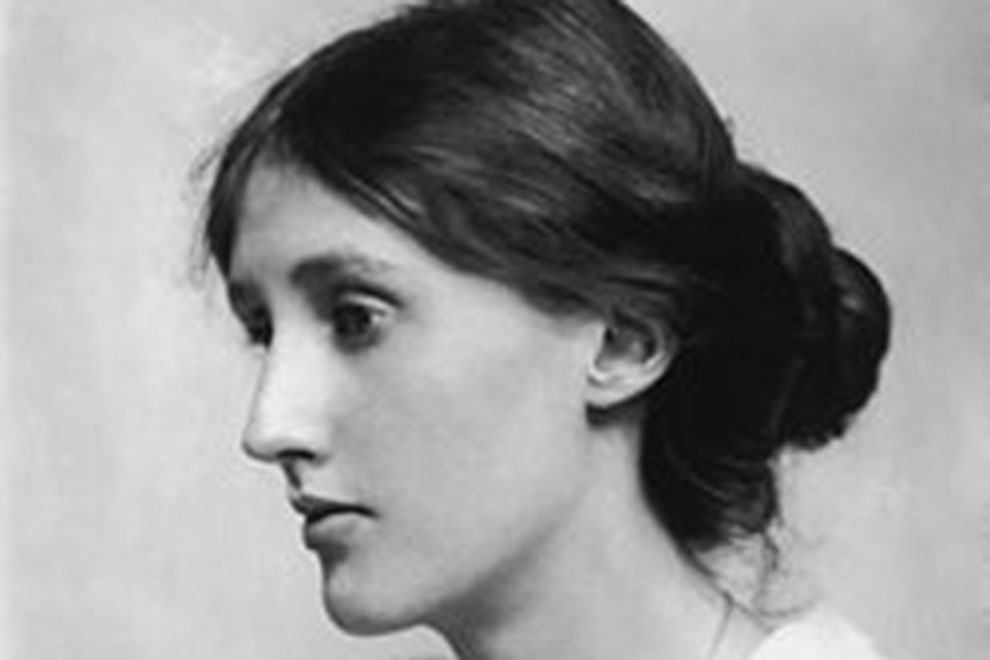
Virginia Woolf (1882-1941) lived during a tumultuous and transformative time in Europe and was a pioneering modernist novelist and essayist of the early 20th century. She is a novelist Noonan keeps coming back to for her breathtaking prose. “Her novels reflect deeply on how identity is formed and maintained over time, the value of literary art in the world today, and the ways in which gender shapes our circumstances and opportunities.” Noonan loves teaching her works to students—particularly since Saint Mary's College has a large collection of original editions of Woolf's novels that were signed by Woolf. These volumes offer students a chance to get a bit closer to Woolf and her art than otherwise might be possible through interacting with just a modern edition.
Laura Williamson, professor of Humanistic Studies
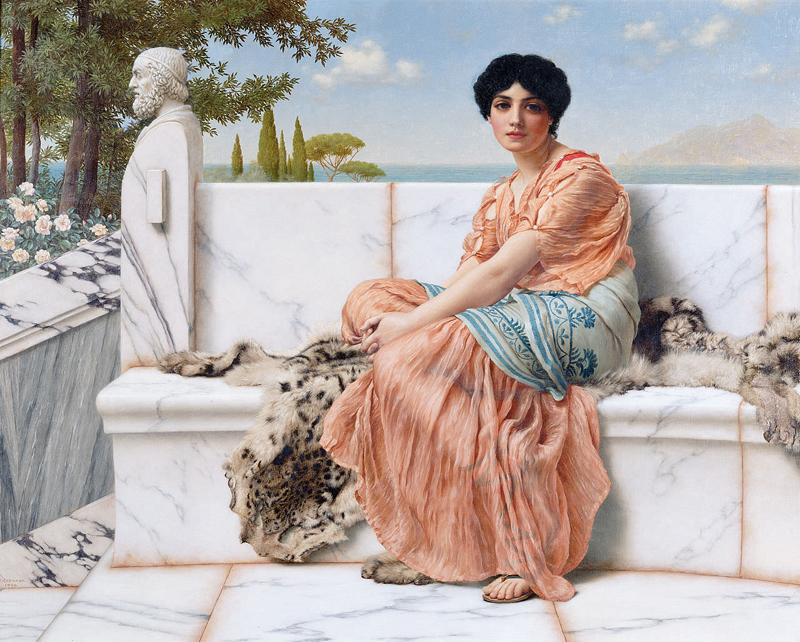
Williamson also teaches Marie de France, as well as the ancient Greek lyric poet Sappho to her upper-level seminars. Sappho was from Eresos or Mytilene on the island of Lesbos. She is known for her lyric poetry, written to be sung while accompanied by music. In ancient times, Sappho was widely regarded as one of the greatest lyric poets and was given names such as the "Tenth Muse" and "The Poetess." For her introductory courses, Williamson also shares Virginia Woolf with her students, asking the question: “What does it mean to have a room (creative space) of one’s own?”
.jpeg)
Two more writers who made Williamson’s list to share with her intro students are Julia Alvarez, who delivered the Fall 2025 Humanities Lecture, and Maya Angelou. Alvarez is an American poet, novelist, and essayist. She rose to prominence with the novels How the García Girls Lost Their Accents, In the Time of the Butterflies, and Yo!
.jpg)
Angelou was an American memoirist, essayist, poet, and civil rights activist. She published seven autobiographies, including the classic I Know Why the Caged Bird Sings, three books of essays, several books of poetry, and is credited with a list of plays, movies, and television shows spanning over 50 years.
Scarlet Spain, assistant professor of Nursing Science
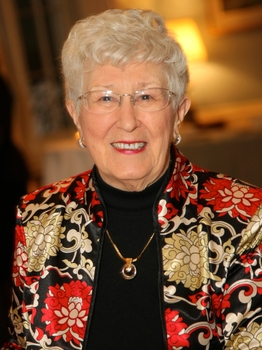
Spain shares with her student the astounding story of Dr. Loretta Ford, an American nurse and the co-founder of the nation’s first nurse practitioner program. While training nurses in public health at the University of Colorado, Ford became one of the first test field teachers, training students from the Denver Visiting Nurse Service in these communities. During this time, she noted a deficit of care in these communities, which she and other nurses filled with temporary health clinics. This experience confirmed for Ford that nurses could independently fill gaps in healthcare if offered specialized training. Ford began developing the specialized training she envisioned through the Western Interstate Commission for Higher Education in Nursing. With this organization, Ford was part of a team of educators who developed a specialized clinical curriculum for community health, a curriculum she brought to University of Colorado to further develop. In 1965, Ford joined with pediatrician Henry Silver to create the pediatric nurse practitioner program at the University of Colorado. This was the first nurse practitioner program in the United States. Ford passed away in January 2025 at age 104.
Molly Gower, Vice President for Mission
Gower highlights four remarkable women of faith who continue to influence her work at Saint Mary’s.
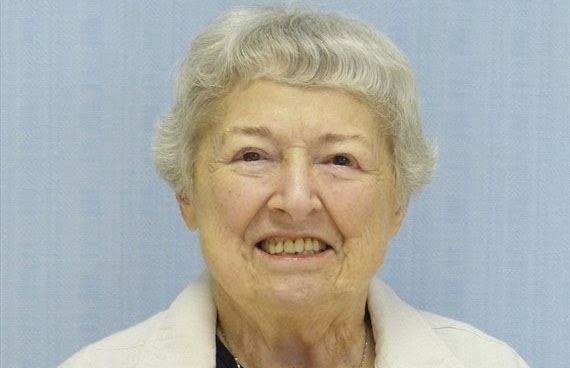
Sister M. Elena Malits ’56, CSC, (1934-2022) Sister Elena was a beloved professor of religious studies at Saint Mary’s College for more than 25 years. Born in 1934 in Pittsburgh, Pennsylvania, Sister Elena obtained her undergraduate degree in philosophy from Saint Mary’s in 1956. Inspired by the Sisters of the Holy Cross, she entered the novitiate three months after graduation. She earned her master’s in theology from Saint Mary’s School of Sacred Theology in 1959. Malits taught theology at Cardinal Cushing College for eight years and was the department chair for two years. She earned her PhD in theology from Fordham University in 1973. Sister Elena wrote her dissertation on Thomas Merton’s conversion story in his book Seven Story Mountain. She later wrote The Solitary Explorer: Thomas Merton’s Transforming Journey. In 2000 Sister Elena, then a professor emerita, began the course titled “Religion and Film,” using film to teach students who hadn’t grown up with scriptural texts and images about the human conditions of good and evil, love and loss, and redemption and transformation. She died in 2022 at the age of 87.
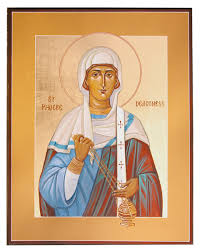
Phoebe was a first-century Christian woman mentioned by the Apostle Paul in his Epistle to the Romans, verses 16:1–2. A notable woman in the church of Cenchreae, she was trusted by Paul to deliver his letter to the Romans. Paul refers to her both as a "deacon" and as a helper or patron of many.
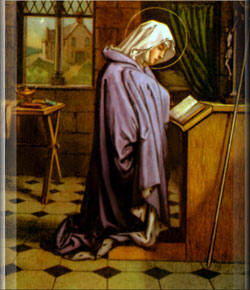
Gertrude of Helfta, or Gertrude the Great (1256–1302) was a German Benedictine nun and mystic who was a member of the Monastery of Helfta. While herself a Benedictine, she had strong ties to the Cistercian Order; her monastery in Helfta is currently run by Cistercian nuns. She devoted herself to her studies, and received an education in many different subjects. Gertrude was both fluent in Latin and very familiar with scripture and works from the Fathers of the Church, including Augustine. Gertrude also inspired the writings of Sister M. Madeleva Wolff, CSC.
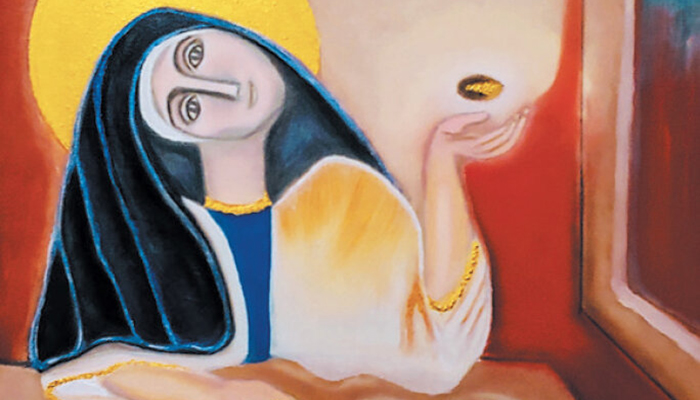
Julian of Norwich (1343-1416?) was a medieval English Catholic anchoress, which means she lived in permanent seclusion in a cell attached to the eponymous Saint Julian Church in Norwich, England. Her writings, now known as Revelations of Divine Love, are the earliest surviving English language works attributed to a woman. In 1373 during a serious illness she feared she would die, Julian received a series of visions of the Passion of Christ. She recovered and wrote two versions of her experiences, the earlier one was completed soon after her recovery, followed years later by a much longer version, known today as the Long Text. Her writings, while preserved, were prevented from being published during the Reformation. The Long Text was first published in 1670 by Serenus de Cressy, a Benedictine monk, and was reissued by George Hargreaves Parker in 1843. A modern version was published in 1864. Julian's writings became more widely known 1901 when a manuscript in the British Museum was transcribed and published with notes by Grace Warrack. Today, Julian is considered to be an important Christian mystic and theologian.
Long before the establishment of Women’s History Month, inspiring women have led, educated, and filled the world with truth, knowledge, and beauty. Now, every March we publicly celebrate an ever-growing roster of powerhouse women who continue to inspire us.
March 26, 2026