

End-of-Life Curricula: An Important Lesson for Saint Mary’s Nurses
By TESS HAYES ’25
Each year, Associate Professor of Nursing Rick Becker brings junior nursing students in his Chronic Med Surge course to Cedar Grove Cemetery, located left of the main entrance to the University of Notre Dame. The purpose is to offer an immersive experiential lesson on life, death, and compassionate care—a lesson difficult to teach inside the confines of a classroom.
This semester’s visit, on a blustery, snowy February morning, Becker and his students gathered in the warmth of All Souls Chapel at the heart of the cemetery to meet up with its director, Jon Adamson.
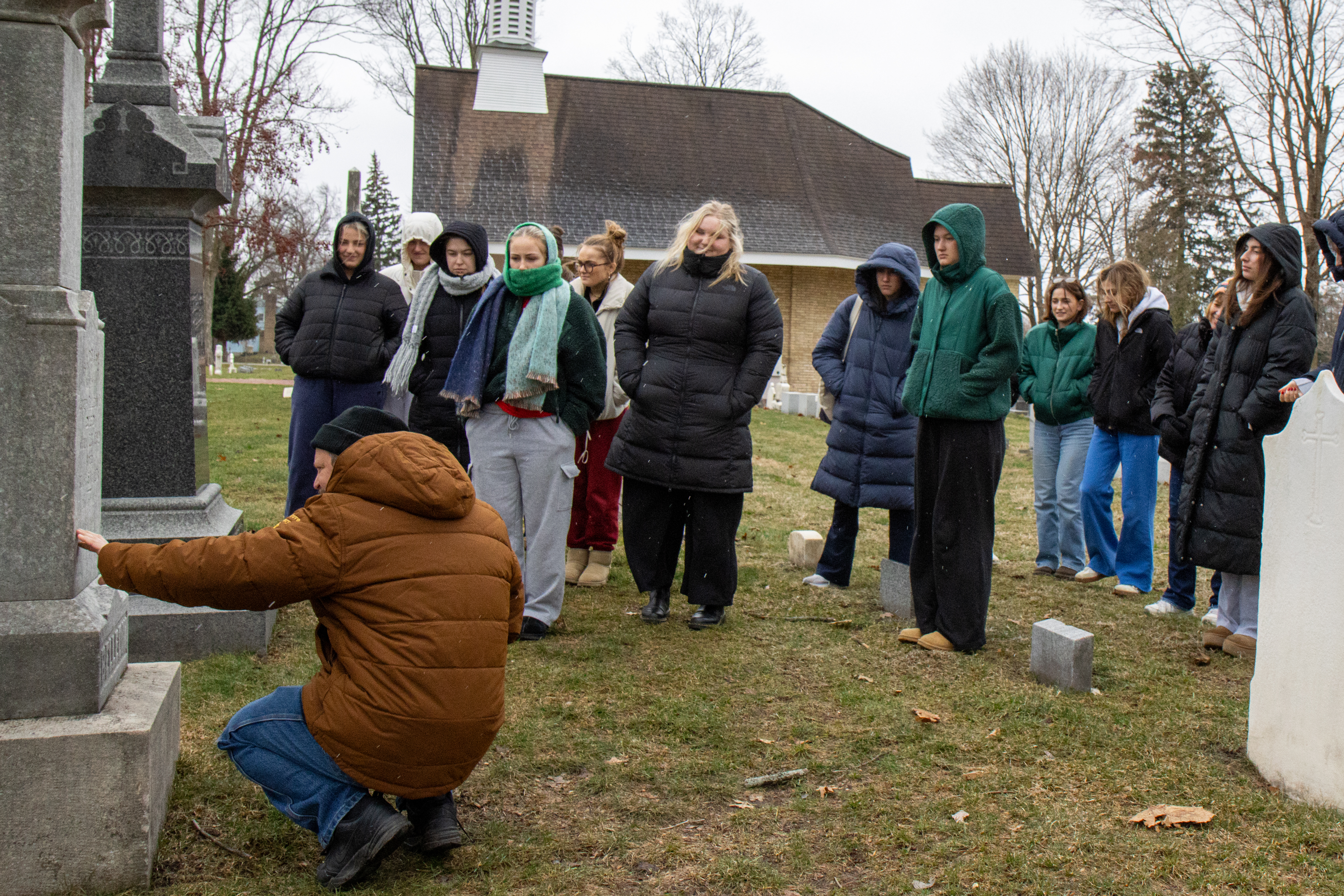
As the wind howled and snow began to flurry outside, Adamson—to the group's surprise—began in song: “Let’s start at the very beginning/A very good place to start/When you read you begin with?...” Confused and giggly, students who have seen The Sound of Music, sang back: “ABC?”
Beginning his lesson with this song, Adamson reminded the students that as future nurses they would, at some point or other, find themselves at the threshold of birth and death with their patients. “We are at a cemetery, which is the end of things, the end of life. You find yourselves serving as nurses in spaces such as hospitals or nursing homes, which is often a place where life begins and ends.” Urging students to keep his song in mind, “When you do the work that we do, work that comes at the end of life, you will encounter a new beginning, which requires magnification.”
At Saint Mary’s, such end-of-life curricula is a routine part of many students’ academic journey. For students in healthcare, it joins their rigorous, immersive clinical rotations. When nursing students are in Becker’s rotation, he deemphasizes the paperwork portion of the class, in order to better emphasize why listening is such an important part of their learning experience.
“Students apologize to me when they don’t get their paperwork in on time. They’ll tell me that they had been talking to their patient, who was telling stories, crying, worried, or scared,” he said. “I tell them it’s okay—that is part of the job on this rotation. It is a real gift for them to have that experience.”
Frances Kominkiewicz, founding chair of the Master of Social Work, says students come to understand that death is a natural part of the human experience. “In social work, students learn skills of policy advocacy, such as understanding the intricacies of hospice care, advanced directives, and the intersectionality of multiple social identities that prevent clients or patients in marginalized communities from accessing quality end of life care,” Kominkiewicz said.
“This knowledge is important and transformation for students, as healthcare increasingly moves toward integrated models of collaboration,” says Kominkiewicz. “This helps change the quality of the experience for the patient/client and their families.”
Because of the unique learning opportunities such as cemetery tours, students at Saint Mary’s learn inside and outside of the classroom how to magnify the motto of the Congregation, “Ave Crux, Spes Unica!—Hail the Cross, Our only Hope!” This learning reflects both the mission and heritage of the College, as well as the collective mission and heritage of the tri-campus community by taking advantage of shared resources.
Becker says that nursing students get a bit of theology and ministry in his classes, emphasizing the collective end all people meet: “I remind them that as 20-year-olds who care for older people sick with cancer or dying, that they too will not live forever. As they work, they are caring for someone’s mother, father, sister, brother, or spouse—a whole person.” He teaches students to appreciate the privilege of living and accompanying people in times of suffering, sorrow, and fear.
The Tour
After offering a brief history lesson of the 22-acre Cedar Grove landscape and taking questions, cemetery director Adamson told students:
Your job is to help your patients die, and to magnify them as they transition into eternal life. My job is to receive them and magnify them in death.
- Jon Adamson
He then guided students on a tour where they met the grave of Barbara Belladin, a German immigrant who attended the first Log Chapel Mass on Christmas Eve 1843. They paused at the resting places of members of the Pokagon Band of Potawatomi, particularly meeting Mary Ann Peashway, daughter of Potawatomi leader Chief Benack, who married John Peashway. Many South Bend locals and employees of the tri-campus community recognize “Peashway” as a residential street name less than a mile south of the campus.
They met Arthur and Emma Hass. Arthur was an Austrian-Jewish quantum physicist who was able to secure a professorship at Notre Dame, escaping Nazi control. He later converted to Catholicism after marrying Emma, a professor who had been living and working at Saint Mary’s College. He later converted to Catholicism after marrying Emma. While Arthur was at Notre Dame, Emma taught at Saint Mary’s College. They shared a passion for scholarship and inquiry. After Arthur’s death, Emma worked for the CIA as an Austrian-American undercover spy.
In between visits and introductions to these resting places, Adamson shared stories from his experiences with people dying, mourning, and planning. He answered questions about how he balances his magnification in difficult and scary conversations: "It’s all about being able to read the person in front of you. Sometimes, I use humor. Other times, I just listen and bear witness to the suffering. Either way, with patience, I follow their lead,” he said.
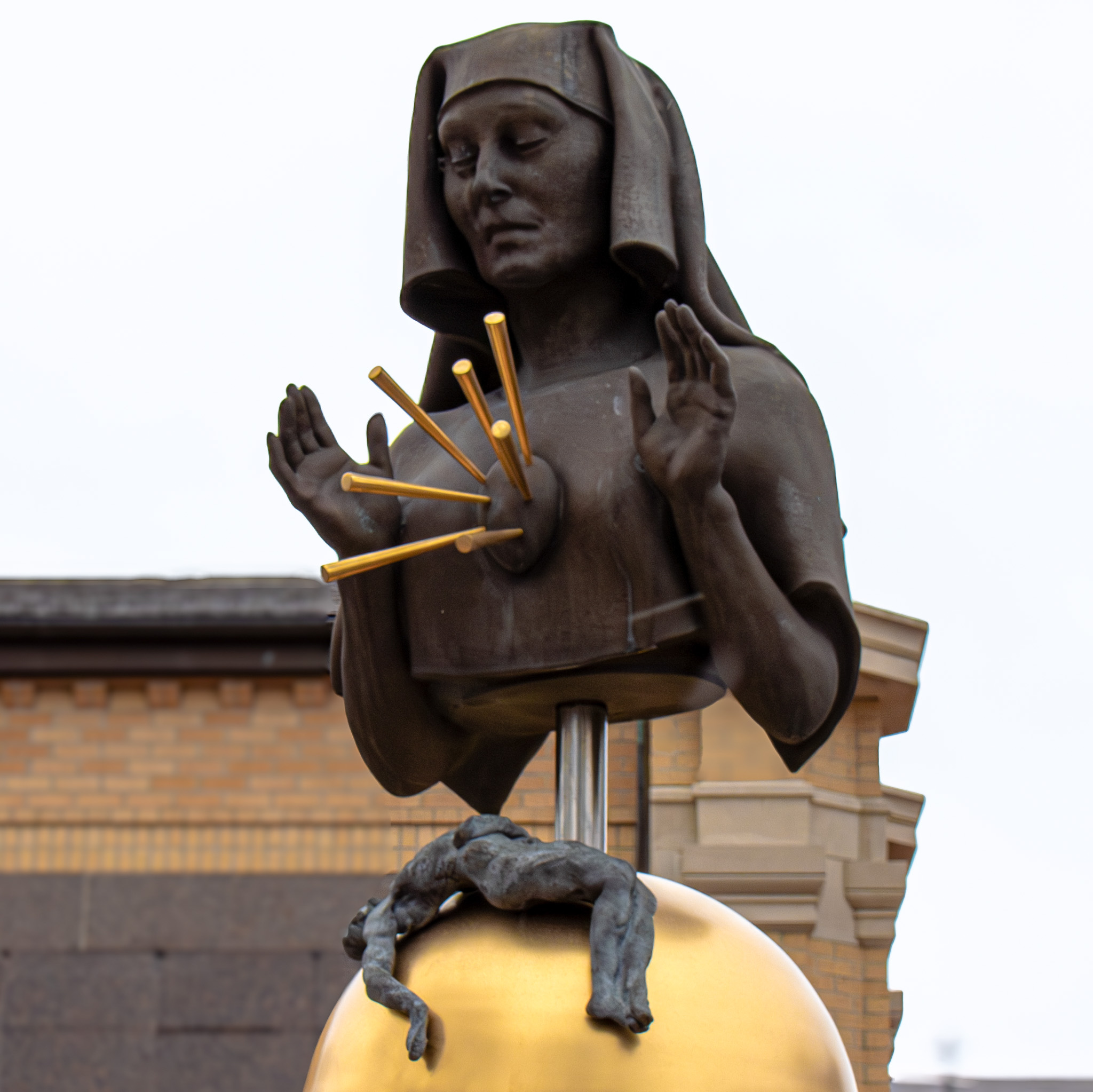
On that snowy day, students encountered a statue of Our Lady of Seven Dolors. Our Lady of Seven Dolors, or Our Lady of Sorrows, the patroness of the Holy Cross family. The importance of our patroness is reflected in the nursing program at Saint Mary’s, particularly the Sisters of the Holy Cross, who were called to serve as nurses in the American Civil war with no prior training.
When the tour concluded, students got in their cars and headed back to campus to defrost, but left with a lesson unique to them and to Saint Mary’s.
May 14, 2026